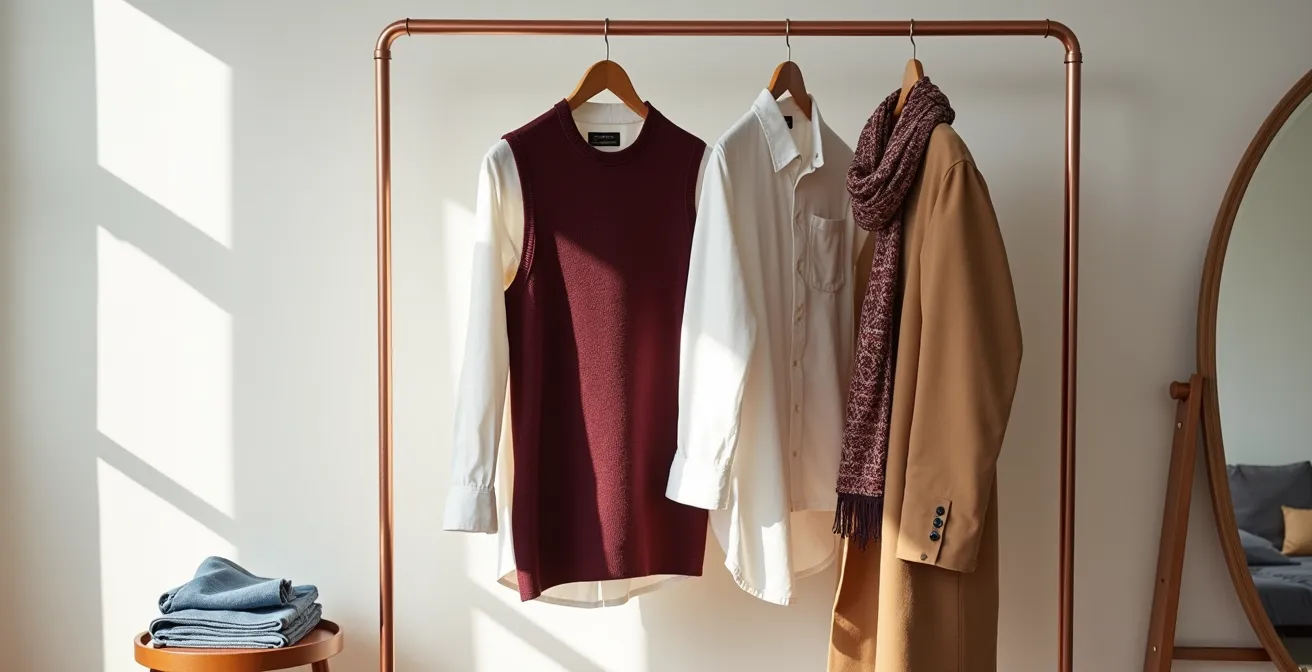
In summary:
- Stop chasing fast fashion. Refresh your look by strategically adding just two “gate-opener” items: one foundational piece and one high-impact accessory.
- Learn to distinguish lasting styles from fleeting micro-trends by looking for cross-category presence and sustained interest.
- Prioritize quality, even on a budget, by inspecting seams, hardware, and fabric content to ensure longevity beyond a few washes.
- Think of your clothing as an investment. Unique colors can have higher resale value, and tailoring can make affordable pieces look couture.
The promise of a capsule wardrobe is simplicity and clarity. Yet, after a few seasons, that curated simplicity can start to feel… stale. You look at your rack of timeless neutrals and feel the pull of new silhouettes and vibrant colors flashing across your social media feeds. The common advice is often a trap: either splurge on designer trends you can’t afford or dive into cheap, disposable fast fashion that contradicts the very ethos of a minimalist wardrobe. This leaves you feeling stuck between boredom and waste.
But what if the solution wasn’t about buying a whole new wardrobe or resisting trends altogether? The key to a modern, dynamic capsule wardrobe lies not in quantity, but in strategy. It’s about a strategic refresh, moving beyond simple shopping to a curated exercise in identifying a few high-impact pieces. These aren’t just additions; they are ‘gate-opener’ items, carefully chosen to unlock dozens of new combinations within the clothes you already own and love.
This guide provides a stylist’s framework for making those smart, budget-conscious updates. We will explore how to select the two key items that can redefine your entire seasonal look, how to distinguish a fleeting fad from a style with staying power, and how to assess quality so your trendy pieces last. We’ll also cover advanced tactics like choosing items with future resale value and using tailoring to achieve a high-end finish, turning your timeless canvas into a space for curated relevance.
For those who prefer a visual summary, the following video offers a fantastic overview of the core principles for building and maintaining a versatile wardrobe.
To help you navigate this strategic approach, this article is structured to walk you through each critical decision point. The summary below outlines the key stages, from initial selection to final elevation, ensuring you have a clear roadmap to a perfectly refreshed wardrobe.
Summary: A Strategic Guide to Seasonal Capsule Wardrobe Updates
- Why You Only Need 2 Trendy Items to Refresh Your Look?
- How to Distinguish a Micro-Trend From a Long-Term Style?
- Linen vs Cotton: Which Transitions Better From Spring to Summer?
- The Quality Error That Makes Trendy Clothes Fall Apart After 3 Washes
- Storing Winter Clothes: The Cleaning Step You Must Do Before Packing
- Why Limited Edition Colors Fetch Higher Resale Prices?
- The ‘Recycled’ Label Trap That Hides Non-Recyclable Binders
- How to Tailor Ready-to-Wear Clothes to Look Like Couture?
Why You Only Need 2 Trendy Items to Refresh Your Look?
The paradox of a capsule wardrobe is that its biggest strength—a limited, cohesive collection—can also be its weakness, leading to style fatigue. The impulse is to add more, but the secret to a successful refresh is surgical precision, not a complete overhaul. Adopting a strict two-item rule forces you to be a curator, not just a consumer. This approach isn’t about deprivation; it’s about maximizing impact. By focusing your budget and attention on just two strategic pieces, you ensure they are high-quality and versatile enough to breathe new life into your entire existing wardrobe.
This method has a powerful side effect: it simplifies your daily routine. The core purpose of a capsule is to reduce decision fatigue, and this principle holds true even when updating it. By integrating only two new items that are pre-vetted to work with your staples, you maintain that ease and efficiency. This focused approach prevents the closet chaos that comes from impulse-buying multiple disconnected trends. It’s the difference between adding a single, perfect spice to a recipe versus throwing in everything from the pantry and hoping for the best.
The key is to select one ‘Anchor’ piece and one ‘Accent’ piece. The Anchor is a foundational garment with an updated silhouette—think wide-leg trousers or a structured, oversized blazer. The Accent is a lower-cost, high-impact accessory that introduces a new color, texture, or detail, like a sculptural belt or a vibrantly colored bag. Together, they act as powerful gate-openers, unlocking fresh combinations and making your trusted basics feel entirely new again. The following plan breaks down how to implement this formula.
Action Plan: The 2-Piece Trend Integration
- Choose one ‘Anchor’ trend piece: a foundational item with a new silhouette (like wide-leg trousers or an oversized blazer).
- Select one ‘Accent’ trend piece: a low-cost, high-impact accessory in a trending color or texture (scarves, bags, or belts).
- Ensure both pieces work with at least 5 existing items in your capsule to guarantee versatility.
- Test wear each trend piece with 3 different outfits before committing to confirm its role in your wardrobe.
- Replace these two trend slots seasonally to maintain freshness without accumulating excess.
How to Distinguish a Micro-Trend From a Long-Term Style?
Once you’ve committed to the two-item rule, the next challenge is choosing wisely. In a world of accelerated trend cycles, it’s crucial to differentiate a fleeting micro-trend from a long-term style with genuine staying power. A micro-trend often explodes on a single social media platform, is tied to a specific aesthetic (like “Coastal Cowgirl” or “Balletcore”), and burns out within a few months. Investing in these is the fastest way to end up with an irrelevant and dated wardrobe.
A long-term style, or macro-trend, demonstrates endurance. Its key characteristic is cross-category presence. When you see a pattern, color, or silhouette appear not just in tops, but also in bags, shoes, coats, and home decor, it’s a sign that it has transcended a niche audience and is embedding itself into the broader culture. These are the trends worth considering for your capsule wardrobe because they offer more longevity and a better cost-per-wear calculation.
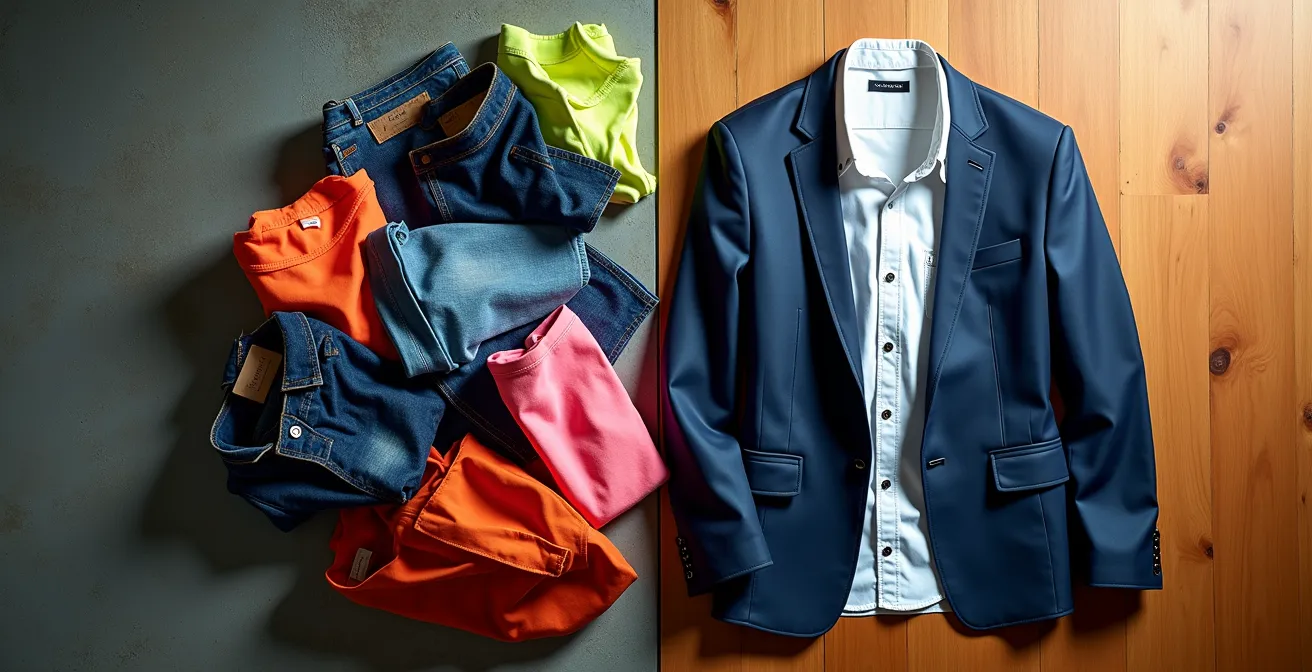
Look for evolution rather than revolution. Timeless pieces like the trench coat or the white shirt evolve slowly; their silhouettes may shift slightly from season to season (a wider lapel here, a longer hem there), but their fundamental identity remains. A trend that can be seen as a modern interpretation of a classic is more likely to last than something completely novel and extreme.
Case Study: Leopard Print’s Journey from Micro to Macro Trend
Fashion editor Brittany Davy’s analysis of trends reveals that leopard print, once seen as a niche or even gaudy micro-trend, has become a lasting style element. After dominating trends for over a year, it shows no signs of fading. The pattern’s appearance across all categories—from bags and shoes to coats and dresses—proves its successful transition from a fleeting trend to a timeless “neutral” in many wardrobes. This demonstrates how sustained consumer interest and cross-category adoption can elevate a trend to permanent style status, making it a safe and strategic addition to a capsule.
Linen vs Cotton: Which Transitions Better From Spring to Summer?
When updating your capsule for the warmer months, fabric choice is paramount. For the transition from the mildness of spring to the heat of summer, two natural fibers dominate: cotton and linen. While both are excellent choices, they serve slightly different purposes, and understanding their performance is key to making a strategic investment. Cotton is the familiar default—soft, versatile, and relatively affordable. It’s perfect for basic tees and everyday shirts.
Linen, however, is the superior choice for high summer and true transitional wear. Its magic lies in its structure. The fibers have a lower thread count, which allows for exceptional breathability, wicking moisture away from the skin and keeping you cool in ways even the best cotton cannot. While it has a higher initial cost, its durability is unmatched. A high-quality linen garment can last for decades, softening and improving with every wash, whereas cotton tends to degrade over time. This makes linen’s cost-per-wear significantly lower in the long run.
The primary objection to linen is its tendency to wrinkle. However, a modern approach reframes this not as a flaw, but as a feature. The rumpled, relaxed texture of linen is part of its inherent charm and signals a certain effortless elegance. It’s a fabric that is meant to be lived in, not kept pristine. For a capsule wardrobe, where every piece must be both beautiful and functional, linen’s combination of durability, breathability, and character makes it the winning choice for pieces like shirts, trousers, and blazers that need to perform from May through September.
The performance differences become even clearer when compared directly. As a recent analysis of natural fabrics shows, linen consistently outperforms cotton in key areas of sustainability and longevity.
| Criteria | Linen | Cotton |
|---|---|---|
| Water Usage in Production | 6.4 liters per shirt | 2,700+ liters per shirt |
| Durability | Up to 30 years with care | 5-10 years average |
| Cost Per Wear (5 years) | $0.33 per wear | $0.50 per wear |
| Wrinkle Factor | High (feature, not flaw) | Medium |
| Breathability | Excellent | Good |
| Softness Over Time | Improves with washing | Degrades with washing |
The Quality Error That Makes Trendy Clothes Fall Apart After 3 Washes
When buying a trendy item on a budget, it’s tempting to accept poor quality as a given. This is a critical mistake. A cheap piece that falls apart after three washes isn’t a bargain; it’s a waste of money and resources. The most common quality error is ignoring the small details that signal structural longevity. Mass-market trend pieces are often designed for visual appeal on the hanger, not for performance in real life. They cut corners on the things you don’t notice at first glance: stitch density, hardware quality, and fabric composition.
A low stitch count (fewer than 8 stitches per inch) on a seam means it will likely pull apart under stress. Unbranded, flimsy zippers are a notorious point of failure. And fabrics that feel soft in the store because they are treated with chemical softeners will often pill and lose their shape immediately after washing. Learning to spot these red flags is a non-negotiable skill for any budget-conscious minimalist. It allows you to find the hidden gems—the affordable pieces that are built to last a season and beyond.
Before purchasing any trendy item, perform a quick quality audit in the store. Don’t just look at the price tag; calculate the potential cost-per-wear. A $50 blouse that you can wear 20 times is a much better investment than a $25 one that you throw away after three. As environmental researchers have pointed out, the hidden cost of poor quality is immense.
The typical fast-fashion jeans are worn only seven times before being tossed, giving the garment a carbon footprint that is more than 10 times higher per wear than traditional denim.
– Grist Environmental Research
To avoid this trap, use a simple checklist to assess any potential purchase. This five-point inspection takes less than a minute and can save you from a bad investment.
- Hardware Test: Check for YKK or other branded zippers. Unbranded, flimsy zippers are a primary point of failure.
- Transparency Test: Hold the fabric up to a light source. If you can see through it too clearly, it likely has a loose weave that will pill or warp within five washes.
- Stitch Density Check: Examine the main seams. You should see a minimum of 8-10 stitches per inch. Fewer stitches indicate a weak seam that is likely to pucker or break.
- Stress Point Inspection: Gently pull at the seams around the armholes and crotch. They should not gap or show the thread. This indicates poor construction.
- Fabric Content Review: Check the label. For better longevity and comfort, avoid synthetic blends that contain less than 20% natural fibers (like cotton, linen, or wool).
Storing Winter Clothes: The Cleaning Step You Must Do Before Packing
As you make room for your new spring and summer pieces, proper storage of your winter wardrobe is crucial for its longevity. The single most destructive mistake you can make is storing clothes that are not perfectly clean. Even if a sweater or jacket looks clean to the naked eye, invisible body oils, perfume residue, and microscopic food particles remain on the fibers. Over several months in storage, these residues oxidize and can attract pests like moths, leading to yellowed stains, fabric degradation, and irreversible damage.
The essential rule is: every single item must be professionally dry-cleaned or laundered according to its care label immediately before being stored. This is a non-negotiable step. For natural fibers like wool and cashmere, this process not only removes damaging residues but also helps restore the natural loft of the fibers. This isn’t just about cleanliness; it’s a preventative investment that protects the value of your garments. Skipping this step to save a few dollars on cleaning can result in hundreds of dollars in replacement costs next season.
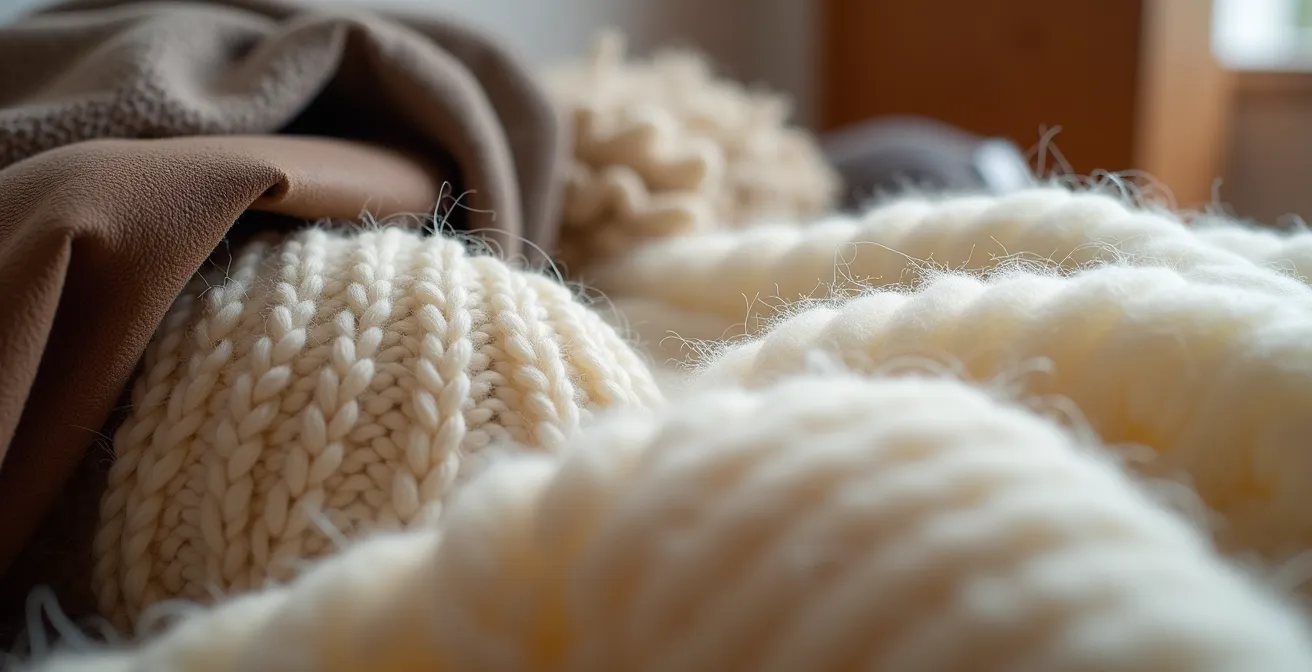
After cleaning, the storage environment is the next priority. Avoid plastic containers and bags, which can trap moisture and cause mildew. Instead, opt for breathable canvas garment bags or acid-free storage boxes. For fine woolens and cashmere, adding natural moth repellents like cedar blocks or lavender sachets provides an extra layer of protection. This careful preparation ensures that when you unpack your winter clothes next fall, they are fresh, undamaged, and ready to wear.
Case Study: The Financial Impact of Pre-Storage Cleaning
A U.S. boutique hotel chain learned the importance of this step when storing their high-end linen items seasonally. By implementing a strict pre-storage protocol that switched from standard detergents to a pH-neutral cleaning process with a final vinegar rinse, they achieved a remarkable outcome. The hotel reduced fabric degradation by 40% over a single 12-month period. This simple change in their cleaning procedure saved them an estimated $38,000 annually in replacement costs, demonstrating the massive financial return on investing in proper pre-storage treatment for natural fibers.
Why Limited Edition Colors Fetch Higher Resale Prices?
When selecting a trendy accent piece, most people focus on the immediate appeal. However, a truly strategic approach involves considering an item’s future archival value. This is especially relevant in the booming luxury resale market, which is a $39.5 billion market in 2024, growing to $54.8 billion by 2029. In this ecosystem, limited edition and seasonal colors often fetch significantly higher resale prices than standard black, navy, or beige. This is because they act as temporal markers, instantly identifying a piece as belonging to a specific, desirable collection.
A unique, branded color becomes a searchable asset in itself. For example, a “Bottega Green” bag is not just a green bag; it’s a piece of fashion history. This brand association and a specific color name create a dedicated market of collectors and enthusiasts searching for that exact item. This searchability factor allows sellers to command a premium. Data from the resale market confirms this phenomenon, showing that certain color families consistently outperform others.
Case Study: The “Bottega Green” Phenomenon
In 2024, searches for ‘Bottega Green’ items surged by over 200%, a clear indicator of how a specific, branded color can create its own highly searchable market. Limited edition colors like ‘Valentino PP Pink’ or this iconic green function as historical markers in fashion. They give a garment or accessory an archival value that goes far beyond its simple utility. This unique searchability and collector appeal is why sellers can often command premiums of 15-30% over items listed with generic color descriptions like ‘bright green’ or ‘hot pink’.
While you may not be buying haute couture, the principle applies to accessible luxury and even high-end high street brands. When choosing between a standard color and a well-publicized seasonal color for an accent piece like a bag or shoes, opting for the latter can be a smarter long-term financial decision. According to resale experts, the right color choice can make a significant difference in an item’s retained value, with FASHIONPHILE’s 2024 data revealing that blue items outperformed standard colors by a remarkable 24.5% in the resale market. This transforms a simple trend purchase into a savvy, liquid asset.
The ‘Recycled’ Label Trap That Hides Non-Recyclable Binders
In an effort to shop more consciously, many of us reach for items proudly labeled as ‘recycled’. However, this label can often be a form of greenwashing, creating a ‘recycled’ label trap. The most common issue lies with blended fabrics. The majority of garments made from “recycled polyester” or other recycled synthetics also contain elastane or spandex to provide stretch and comfort. While this makes the garment more wearable, it makes it almost impossible to recycle again.
The process of separating these intricately blended fibers is technically complex and extremely costly. As a result, that “recycled” t-shirt is almost certainly on a one-way journey to the landfill once you are done with it. The ‘recycled’ claim refers to its origin (it was made from recycled materials, often plastic bottles), not its destination (it cannot be turned back into new fabric). This is a critical distinction that is often obscured by marketing.
The challenge of recycling blended textiles is one of the biggest hurdles facing the entire sustainable fashion movement. Even companies with cutting-edge technology have struggled to make it commercially viable, highlighting a massive gap between our desire to recycle clothes and the industry’s actual capabilities.
Case Study: The Sobering Reality of Textile Recycling
The 2024 bankruptcy of Renewcell, a pioneering Swedish textile-recycling company, serves as a stark warning. Despite having proven technology to separate cotton and polyester blends and partnering with major brands like H&M and Levi’s, the company failed to achieve scalable, profitable production. As detailed in a report on the hidden costs of cheap clothing, Renewcell’s failure highlights that while the technology exists, the economic reality and logistical infrastructure are not in place. This means most blended-fabric garments, regardless of their ‘recycled’ content label, effectively end their life cycle with the first consumer.
As a conscious minimalist, the takeaway is to prioritize mono-material garments whenever possible. A 100% cotton, 100% linen, or 100% wool item has a much higher chance of being successfully recycled or biodegrading than a complex blend. When you do buy a blended fabric, understand that its ‘recycled’ label is a mark of its past, not a promise for its future.
Key takeaways
- Strategic Refresh is Key: Focus on adding just two high-impact “gate-opener” items per season to refresh your entire wardrobe.
- Quality Over Quantity: Prioritize structural longevity by checking seams, hardware, and fabric, ensuring even budget-friendly trends last.
- Invest in the Future: Choose trends with long-term potential (macro-trends, unique colors) and care for them properly to maximize their cost-per-wear and resale value.
How to Tailor Ready-to-Wear Clothes to Look Like Couture?
The ultimate secret of a high-end wardrobe isn’t about the price tag; it’s about the fit. Couture looks expensive because it is made to fit one specific body perfectly. You can achieve 90% of that effect by investing a small portion of your budget in tailoring your ready-to-wear pieces. This is the most overlooked and cost-effective way to elevate your entire wardrobe. A $70 pair of trousers that has been hemmed to the perfect length and had the waist taken in will look far more luxurious than a $400 pair worn straight off the rack. In fact, a Swedish fashion brand found a 23% cost reduction by encouraging customers to alter existing pieces instead of buying new ones.
Focus on small adjustments that make a huge visual impact. The most powerful alteration is often at the shoulder seam. In most mass-market jackets and blazers, the shoulder seam droops down the arm. Having a tailor move it to sit precisely at your natural shoulder point instantly creates structure and polish. Another high-impact, low-cost change is upgrading the buttons. Swapping cheap, plastic buttons for horn, corozo, or mother-of-pearl is a simple fix that adds a surprising amount of perceived value.
Building a relationship with a good local tailor is as important as any other part of your style strategy. They are artisans who can transform a good piece into a perfect piece. Don’t reserve tailoring for just expensive investment items. Applying it to your more affordable, trendy additions is what truly integrates them into your wardrobe and makes them look intentional and high-end. Below are a few of the most impactful alterations you can request, most of which cost less than $50.
- Shoulder Adjustment ($30-40): Moving the shoulder seam of a blazer or coat to your natural shoulder point provides an instant structural upgrade and a more powerful silhouette.
- Button Upgrade ($15-25): Replacing standard plastic buttons with higher-quality options like horn, corozo, or mother-of-pearl gives any garment a subtle but significant luxury feel.
- Strategic Darting ($20-30): Adding “fish-eye” darts to the back of a blazer or shirt creates a custom-molded fit that follows the curve of your spine, eliminating bagginess.
- Hem Weight Addition ($10-15): A tailor can sew small chain weights into the hem of a jacket or coat, which improves how the garment hangs and moves with you—a classic couture trick.
- Sleeve Head Adjustment ($25-35): Reshaping the cap of a sleeve can create a cleaner, more refined line at the armhole, removing any puckering or awkward bunching.
By applying these tailoring principles, you complete the strategic refresh of your wardrobe. You have not just added new items; you have perfected them. This final step ensures that every piece in your capsule, from the timeless staple to the trendy addition, works in harmony to create a look that is polished, personal, and effortlessly stylish. Start by identifying one piece in your closet that could benefit from a better fit and consult a local tailor to see the transformation for yourself.