The success of your acne scar treatment depends less on choosing between a peel or a laser, and more on mastering the entire treatment process from preparation to long-term aftercare.
- Optimal results are achieved through meticulous skin barrier preparation and unwavering commitment to post-procedure protocols, especially sun protection.
- The initial “worsening” of skin (redness, peeling) is a necessary, controlled inflammatory phase that signals the beginning of powerful collagen remodeling.
Recommendation: Shift your focus from “which device is best?” to “how can I best prepare my skin and my schedule to support a successful clinical outcome?”
For patients seeking a permanent solution to acne scars, the debate between chemical peels and laser resurfacing can feel overwhelming. You have moved beyond topical creams and are ready for a significant intervention, but the internet is awash with conflicting advice. Many articles focus on a simple comparison of power versus downtime, presenting the choice as a binary one. This approach, however, misses the most crucial element determining your success.
The clinical reality is that the final outcome of your treatment is not solely decided in the procedure room. It is forged in the weeks before and after your appointment. The effectiveness of a high-strength peel or an advanced laser is fundamentally tied to a larger strategy—a treatment continuum that includes meticulous skin preparation, understanding the body’s healing response, and executing flawless aftercare. A perfectly performed laser treatment can be completely undermined by a single post-procedure mistake, while a well-prepared patient can achieve remarkable results from a targeted chemical peel series.
This guide will move beyond the basic “peel vs. laser” comparison. Instead, we will focus on the critical, often-overlooked factors that truly dictate your results. We will explore why your skin might look worse before it looks better, how to create a resilient skin barrier, and how to navigate the healing process to avoid complications like permanent dark spots. By understanding these principles, you can make an informed decision and become an active partner in achieving the smooth, clear skin you desire.
To help you navigate this clinical journey, we have structured this guide to answer the most pressing questions that arise before, during, and after treatment. The following sections will provide the in-depth knowledge needed to plan your procedure for maximum success.
Summary: Chemical Peel vs Laser: A Clinical Guide to Acne Scar Treatment
- Why You Look Worse Before You Look Better After Microneedling?
- How to Prep Your Barrier 2 Weeks Before a Strong Peel?
- Hyaluronic Acid vs Biostimulators: Which Looks More Natural?
- The Post-Laser Mistake That Causes Permanent Dark Spots
- When to Book: Timing Your Procedure Around Social Events
- The UVA Danger That Penetrates Clouds and Windows
- Why Your Moisturizer Evaporates if You Don’t Use an Occlusive?
- What Do Brittle Nails Tell You About Your Diet?
Why You Look Worse Before You Look Better After Microneedling?
One of the most common concerns for patients undergoing regenerative procedures like microneedling—often used alongside or as an alternative to peels and lasers—is the initial appearance of the skin. For several days post-treatment, the skin will appear red, slightly swollen, and feel sensitive. This is not a sign of something going wrong; it is the visual evidence of a powerful and necessary biological process called controlled inflammation.
Microneedling creates thousands of micro-injuries in the skin. The body’s response is to initiate a healing cascade. It rushes growth factors and healing platelets to the area, which causes the temporary redness and inflammation. This phase is the essential trigger for the production of new, healthy collagen and elastin—the proteins that give skin its structure and smoothness. Without this inflammatory signal, the regenerative process would not begin.
This “looking worse” phase is the engine of rejuvenation. In fact, the intensity of this controlled wound-healing response is directly linked to the final result. Studies confirm that the process initiated by microneedling can lead to a remarkable outcome; some research demonstrates that collagen production increased by up to 400% in the months following a series of treatments. Therefore, viewing the initial downtime not as a side effect but as a productive phase is key to understanding the treatment’s value.
How to Prep Your Barrier 2 Weeks Before a Strong Peel?
The success and safety of any intensive skin treatment, particularly a medium-to-deep chemical peel or ablative laser, is determined before you even enter the clinic. The single most important preparatory step is ensuring your skin barrier is healthy, strong, and fully hydrated. An impaired barrier cannot heal efficiently and is significantly more prone to complications like excessive irritation, prolonged redness, and post-inflammatory hyperpigmentation (PIH).
Two weeks before your scheduled procedure, you must shift your skincare focus entirely to barrier fortification. This means eliminating all potential irritants. Stop using all active ingredients, including retinoids (like tretinoin), exfoliating acids (AHA, BHA), vitamin C serums, and physical scrubs. Your regimen should be simplified to two core components: a gentle, pH-balanced cleanser and a robust barrier-repair moisturizer rich in ceramides, cholesterol, and fatty acids. These lipids are the natural “mortar” that holds your skin cells together, preventing water loss and protecting against external threats.
This illustration highlights the structure of a healthy, resilient skin barrier, where the lipid layers are intact and abundant. Your goal in the weeks leading up to your procedure is to build this exact structure to ensure your skin has the resources it needs to heal quickly and correctly.
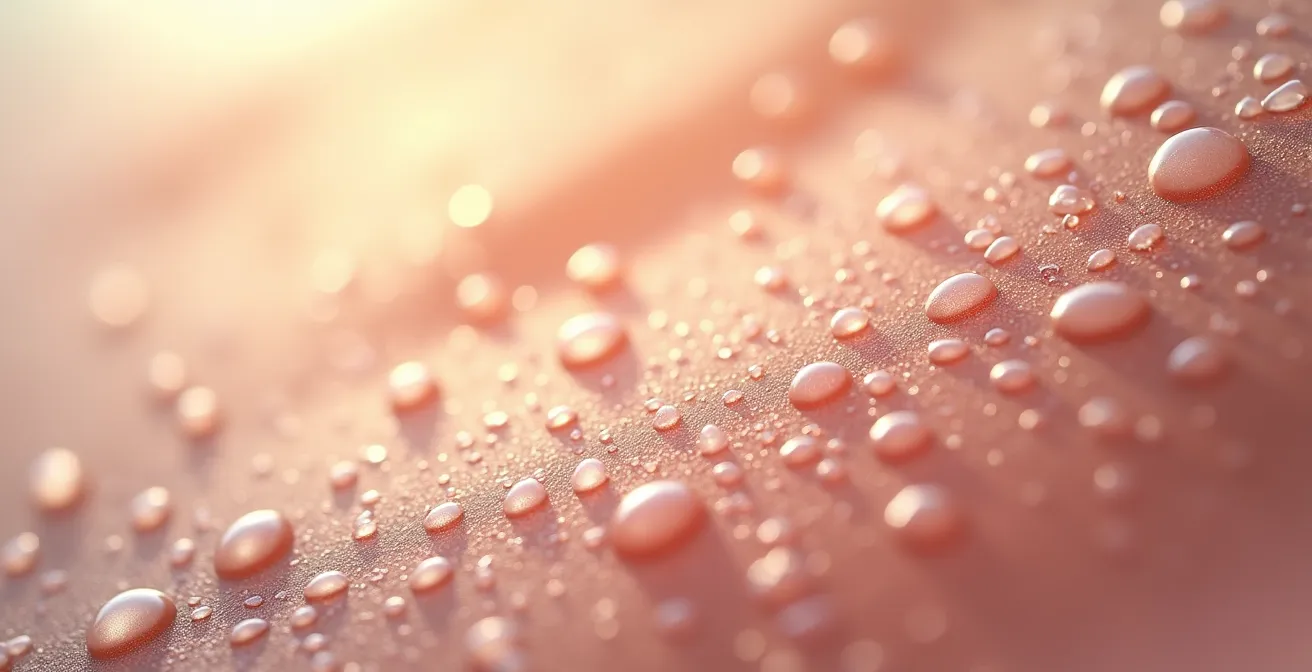
Think of it as preparing a canvas for a masterpiece. A compromised, dry, or irritated canvas will lead to a flawed result, no matter how skilled the artist. By dedicating two weeks to intense hydration and nourishment, you provide your clinician with the optimal foundation to work on, maximizing your results while minimizing risks.
Your Skin Barrier Audit: 5-Step Pre-Procedure Plan
- Inventory Your Actives: List all products you currently use containing retinoids, acids (glycolic, salicylic), or high-concentration vitamins. Plan to cease all use 14 days prior.
- Assess Your Cleanser: Does your skin feel tight or “squeaky clean” after washing? If so, switch to a creamy, non-foaming, sulfate-free cleanser.
- Evaluate Your Moisturizer: Check the ingredients for ceramides, cholesterol, and niacinamide. If they are absent, invest in a dedicated barrier-repair cream for the pre-procedure period.
- Track Hydration Levels: Monitor your skin daily. Is it flaky, red, or easily irritated? These are signs of a compromised barrier that needs more support.
- Implement a “Soothing Only” Protocol: For the final 72 hours, use only your gentle cleanser, your barrier cream, and a broad-spectrum mineral sunscreen. Nothing else.
Hyaluronic Acid vs Biostimulators: Which Looks More Natural?
While peels and lasers address textural scarring, many patients also require volume restoration for atrophic (indented) scars. The conversation then turns to injectables. Traditional fillers are made of hyaluronic acid (HA), a gel that physically occupies space to lift the skin. It provides an immediate result but can sometimes look “done” if not expertly placed. A more advanced category, biostimulators, works on a completely different principle, often yielding a more natural and long-lasting outcome.
Unlike HA fillers that simply “fill,” biostimulators like Sculptra (poly-L-lactic acid) and Radiesse (calcium hydroxylapatite) act as a signal. When injected, their particles stimulate your own body’s fibroblasts to produce new collagen. The product itself is gradually metabolized, leaving behind a new matrix of your own natural tissue. The result is a gradual, subtle restoration of volume that builds over several months. It doesn’t just fill a space; it rebuilds the skin’s underlying structure.
Case Study Insight: The Mechanism of Biostimulation
As detailed in analyses from plastic surgery experts, Sculptra is best understood as a collagen synthesizer rather than a simple volumizer. It excels in treating diffuse volume loss, a common issue with widespread atrophic acne scarring. Its mechanism involves stimulating dermal thickening over time. By prompting the body to build its own structural support, the resulting correction is integrated seamlessly into the patient’s own tissue, which is why it is often perceived as more “natural” than the immediate volume provided by an HA gel. This makes it particularly effective for both facial rejuvenation and improving skin quality in other areas.
This self-generated improvement is also why the results are so durable; since it is your own collagen, the effects are long-lasting. While HA fillers may last 6 to 18 months, biostimulator effects can last for up to two years or more. For patients seeking a solution that corrects scars by genuinely rebuilding the skin from within, biostimulators represent a powerful and natural-looking approach.
The Post-Laser Mistake That Causes Permanent Dark Spots
You have invested time, money, and discomfort into a laser resurfacing treatment. The single most devastating mistake you can make—one that can undo all the benefits and potentially cause permanent damage—is improper sun exposure. After a laser or deep peel, your skin’s protective outer layer is temporarily compromised, and new, vulnerable skin cells are making their way to the surface. This fresh skin is exquisitely sensitive to ultraviolet (UV) radiation.
Exposing this healing skin to the sun can trigger an aggressive overproduction of melanin, leading to post-inflammatory hyperpigmentation (PIH). These are not temporary sunspots; they can be deep, stubborn patches of discoloration that are far more difficult to treat than the original acne scars. As leading surgeons emphasize, diligent sun avoidance is not a suggestion but a clinical necessity.
After chemical peels or laser treatments, it is necessary to avoid sun exposure strictly, as new, healthy skin is produced.
– Dr. Vanek, Mentor Plastic Surgery
This illustration captures the essence of post-procedure protection. Seeking shade, whether from a physical barrier or by staying indoors, is your primary defense. Your skin is in a fragile, regenerative state, and light is its primary adversary.

Strict sun avoidance means more than just applying sunscreen. For the first 7-10 days, it means physically staying out of direct sunlight. Wear a wide-brimmed hat, sunglasses, and seek shade. Plan your activities for the early morning or evening. When you do reintroduce sunscreen, it must be a broad-spectrum, mineral-based formula (zinc oxide and/or titanium dioxide) with an SPF of 30 or higher, reapplied every two hours. Making this non-negotiable is the only way to protect your investment and ensure your final result is clear and even-toned.
When to Book: Timing Your Procedure Around Social Events
Beyond the clinical considerations, the practical logistics of scheduling a resurfacing treatment are paramount. The “social downtime”—the period where your skin is visibly red, peeling, or flaky—is a real factor that must be planned for. Booking your procedure without considering your social and professional calendar can lead to significant stress and pressure to appear “normal” before your skin has fully healed. This is why understanding the typical recovery timelines is essential for a stress-free experience.
The intensity of the treatment directly correlates with the length of both the initial recovery and the social downtime. A light chemical peel may leave you with minimal redness for a day or two, while a medium-depth peel or a Fraxel laser treatment requires a more significant healing period. As you plan your treatment, consider not just the procedure cost but also the “cost” of the downtime. For example, while chemical peels average around $700, while laser resurfacing can range from $800 to over $3000, the more expensive laser may have a social downtime of only 3-5 days, whereas a strong peel could require a full week or more at home.
The following table, based on data from clinical practices, provides a realistic guide to help you schedule your procedure. Use it to work backward from important events like weddings, vacations, or major work presentations, ensuring you are fully healed and looking your best when it counts.
| Treatment Type | Initial Recovery | Full Healing | Social Downtime |
|---|---|---|---|
| Light Chemical Peel | 1-2 days | 3-7 days | Minimal |
| Medium Chemical Peel | 7+ days | 2-3 weeks | 1-2 weeks |
| Fraxel Laser | 48 hours | 7-14 days | 3-5 days |
| Microneedling | 24-48 hours | 4-6 days | 2-3 days |
The best time to book is when you have a clear schedule with no significant social obligations for at least one to two weeks, depending on your chosen treatment. This allows your skin to heal without pressure and ensures you get the beautiful result you’ve planned for.
The UVA Danger That Penetrates Clouds and Windows
Effective sun protection after a procedure goes beyond simply checking the SPF number on a bottle. The most insidious threat to healing skin comes from UVA rays, and understanding their nature is critical. While UVB rays are responsible for sunburn and are blocked by glass, UVA rays penetrate through clouds and windows. This means you are exposed even on an overcast day or while sitting in your office or car. For post-procedure skin, this incidental exposure is a significant risk.
The distinction between the two types of UV rays is vital. The SPF rating on sunscreen only measures protection against UVB (the “burning” rays). To shield yourself from UVA (the “aging” rays), you must look for the words “Broad Spectrum” on the label. For the highest level of protection, particularly common in Asian and European sunscreens, a PA rating (e.g., PA++++) is the gold standard for UVA defense. As a high-authority source like the American Academy of Dermatology confirms, broad-spectrum protection is essential for skin health.
Why is UVA so damaging to healing skin? It penetrates deeper into the dermis, where your new collagen and elastin are being formed. There, it generates a cascade of free radicals that actively degrade these new structural proteins. In essence, UVA radiation directly sabotages the very results your peel or laser treatment was designed to create. It breaks down the collagen you just paid to build. Therefore, applying a broad-spectrum sunscreen every single morning, even if you plan to stay indoors, is a non-negotiable part of your aftercare protocol to protect your investment.
Why Your Moisturizer Evaporates if You Don’t Use an Occlusive?
During the peeling and healing phase after a treatment, your skin’s primary need is hydration. You may be diligently applying a high-quality moisturizer full of hydrating ingredients like hyaluronic acid and glycerin, yet your skin still feels tight and dry an hour later. The problem isn’t necessarily the moisturizer; it’s that you’re missing the final, critical step: an occlusive seal.
Your skin barrier, when compromised, loses its ability to hold onto water. This process is known as Transepidermal Water Loss (TEWL). Humectant ingredients (like hyaluronic acid) are excellent at pulling moisture into the skin, but on their own, that moisture can easily evaporate back into the air through a damaged barrier. This is where occlusives come in. Occlusive agents, such as petrolatum, shea butter, or dimethicone, create a physical barrier on the skin’s surface.
Think of it like putting a lid on a pot of boiling water. Without the lid, the water quickly turns to steam and escapes. The occlusive acts as the lid for your skin, trapping the moisture from your hydrating serums and creams and preventing it from evaporating. This keeps the skin environment moist, which is clinically proven to accelerate wound healing, reduce scabbing, and minimize scarring. During the first few days of recovery, applying a thin layer of a simple occlusive like Aquaphor or Vaseline over your moisturizer is one of the most effective things you can do to support the healing process.
Key Takeaways
- The success of a peel or laser is defined by your pre-care and aftercare, not just the procedure.
- Redness and peeling are productive signs of controlled inflammation, the necessary trigger for collagen production.
- Strict, broad-spectrum sun protection is the most critical factor in preventing post-procedure complications like hyperpigmentation.
What Do Brittle Nails Tell You About Your Diet?
While the focus is often on topical treatments and procedures, the internal health of your body is the ultimate foundation for your skin’s appearance and its ability to heal. An often-overlooked indicator of your internal nutritional status is the condition of your nails. Brittle, splitting, or weak nails can be a sign of deficiencies that directly impact your skin’s ability to regenerate after a chemical peel or laser treatment.
Collagen and keratin, the primary proteins in skin and nails, require a host of vitamins and minerals for their synthesis. Brittle nails can point to a lack of key nutrients, including:
- Biotin: A B-vitamin crucial for the production of keratin.
- Iron: An iron deficiency (anemia) can lead to concave or “spoon” nails and impair oxygen delivery to tissues, slowing healing.
- Zinc and Protein: Both are essential building blocks for tissue repair and cell growth.
If your body lacks the essential raw materials to build healthy nails, it also lacks the resources to optimally heal your skin and produce the robust new collagen needed to repair acne scars. Before embarking on an expensive series of treatments, it is wise to consider this feedback from your body. Addressing potential nutritional gaps through a balanced diet rich in protein, vitamins, and minerals—or consulting with a doctor about supplementation—is part of a holistic approach. It ensures your investment in a procedure is supported from the inside out, giving your skin the best possible chance to heal beautifully.
By understanding the entire treatment continuum—from nutritional readiness and barrier preparation to the procedure itself and meticulous aftercare—you empower yourself to achieve the best possible outcome. The next logical step is to consult with a qualified professional to create a personalized plan that incorporates these principles for your specific skin needs.