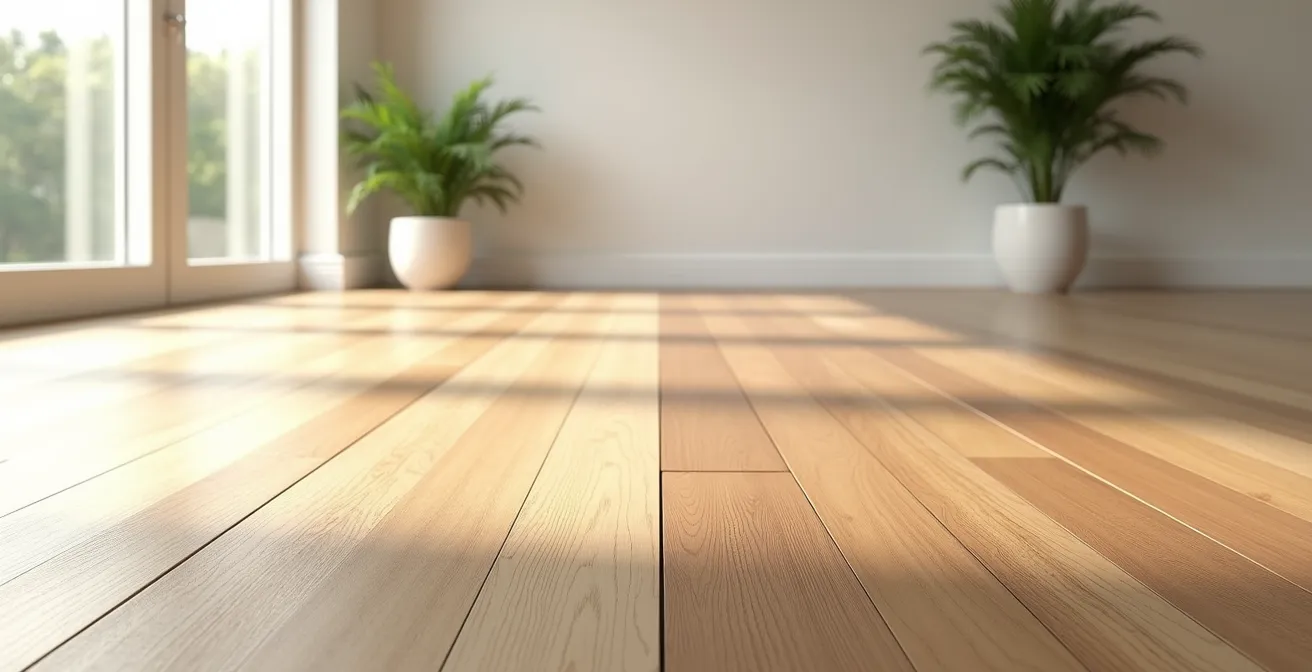
The belief that fast-growing bamboo is automatically greener than slow-growing oak is a dangerous oversimplification used in greenwashing.
- True sustainability depends on the total lifecycle carbon, including processing and thousands of miles of shipping for imported materials like bamboo.
- Hidden chemical loads from industrial adhesives and binders in engineered products can negate the benefits of a “natural” material.
Recommendation: Prioritize locally sourced, solid materials like oak that can be refinished for decades. If choosing bamboo, rigorously investigate its manufacturing process and demand full transparency on binders and transport.
For the home renovator committed to making an ethical choice, the flooring dilemma is a classic. On one hand, you have bamboo, lauded as a sustainability hero for its rapid growth. On the other, there’s traditional oak, a durable classic that requires decades to mature. The conventional wisdom seems simple: a plant that replenishes in five years must be better for the planet than a tree that takes sixty. This logic forms the backbone of countless marketing campaigns and well-intentioned advice blogs.
But this simplistic view often ignores a far more complex reality. It overlooks the heavy industrial processing, the chemical load from adhesives, and the immense carbon footprint of trans-oceanic shipping required to get that “green” bamboo to your doorstep. What if the true measure of sustainability isn’t just renewability, but a combination of factors including a product’s chemical honesty, its total lifecycle carbon, and its potential for a century-long lifespan? What if the slow-growing oak from a responsibly managed forest a few hundred miles away is actually the superior environmental choice?
This article moves beyond the surface-level debate. We will deconstruct the sustainability claims of both bamboo and oak by examining the entire supply chain. We will then expand these critical principles to other materials in your home, exploring how to identify low-impact products, avoid greenwashing traps, and create a living space that is not only environmentally responsible but also genuinely healthy and calming for you and your family.
To navigate this complex topic, this guide breaks down the critical factors you need to consider. From the carbon cost of imports to the hidden chemicals in binders, we provide a fact-based framework for making a truly informed decision for your home.
Summary: A Green Building Consultant’s Guide to Sustainable Materials
- Why Imported Bamboo Might Be Less Green Than Local Oak?
- How to Identify Low-VOC Flooring to Protect Air Quality?
- Cork vs LVP: Which Eco-Option Survives Dogs and Kids?
- The ‘Recycled’ Label Trap That Hides Non-Recyclable Binders
- Optimizing Lifespan: Refinishing Solid Wood vs Replacing Laminate
- How to Create a Material Palette That Doesn’t Clash?
- Linen vs Hemp: Which Is Better for Sensitive Skin Bedding?
- How to Use Natural Textures to Reduce Sensory Overload?
Why Imported Bamboo Might Be Less Green Than Local Oak?
The primary argument for bamboo’s sustainability rests on its incredible growth rate and capacity for carbon sequestration. As a grass, it matures in a fraction of the time it takes for an oak tree and can be harvested repeatedly from the same root system. This is where the green narrative usually begins and ends. To illustrate the appeal, consider the raw potential of these materials.
| Factor | Bamboo | Oak |
|---|---|---|
| Time to maturity | 3-5 years | 30-60 years |
| Growth rate | Up to 4 feet/day | 1-2 feet/year |
| Carbon sequestration | 70% more CO2/acre annually | Baseline |
| Harvest cycle | Annual/bi-annual | Once per lifetime |
These numbers seem to declare a clear winner. However, this data only represents the agricultural phase. It completely ignores the lifecycle carbon generated after the harvest. Most bamboo flooring is manufactured in Asia, requiring it to be processed, packaged, and shipped thousands of miles across the ocean to reach markets in North America or Europe. This journey carries a staggering and often-unseen environmental cost. In fact, the material itself has incredible potential; research from 2019 shows bamboo flooring can be carbon negative with a footprint of -14.89 kg CO2eq per m³. But this is before accounting for the massive emissions from international container shipping, which effectively erases much of that initial carbon benefit. When a locally or regionally sourced solid oak floor avoids this entire trans-oceanic journey, its initially higher “growth cycle” carbon cost can be dramatically offset.
How to Identify Low-VOC Flooring to Protect Air Quality?
Beyond lifecycle carbon, the chemical load of your flooring is a critical aspect of a truly “green” and healthy home. Volatile Organic Compounds (VOCs) are chemicals emitted as gasses from certain solids or liquids, and they can have short- and long-term adverse health effects. These are often found in the adhesives, binders, and finishes used in engineered flooring like bamboo, laminate, and LVP. Identifying low-VOC options is non-negotiable for protecting your indoor air quality.
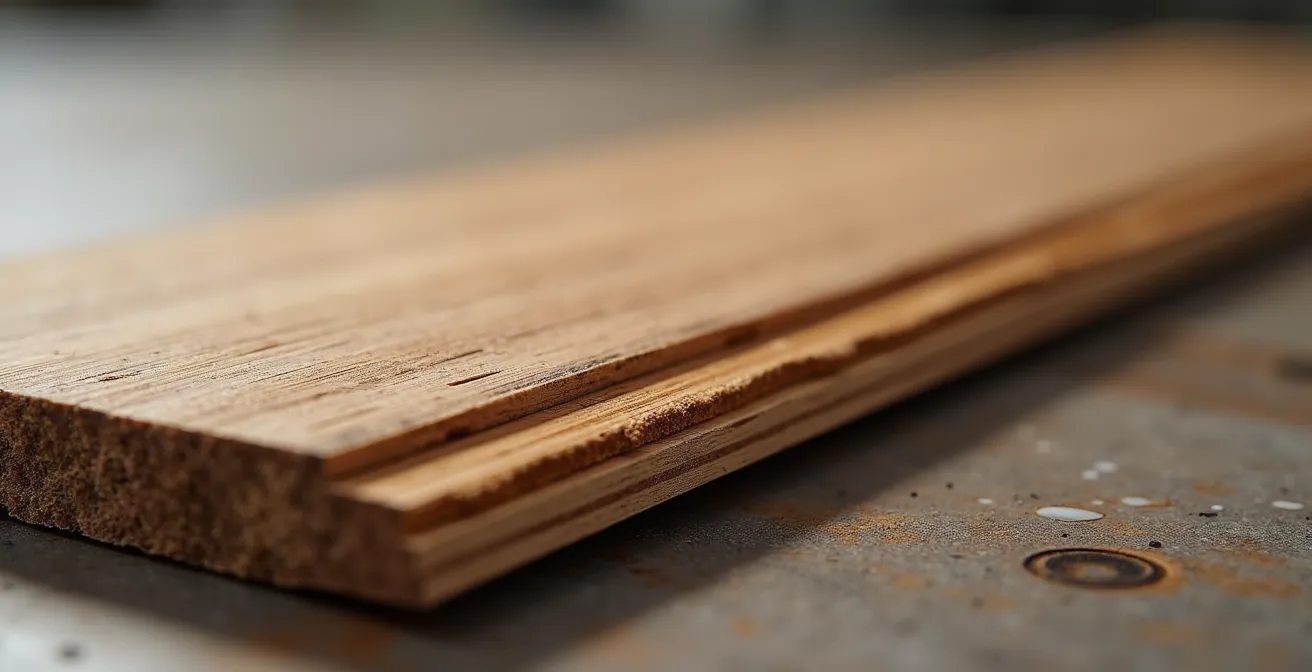
The most reliable way to navigate this is by looking for third-party certifications. Labels like GREENGUARD, GREENGUARD Gold, and FloorScore are not just marketing fluff; they signify that a product has been tested in a controlled environment and meets specific, stringent chemical emission limits. For example, the FloorScore certification tests flooring for compliance with standards covering 35 individual VOCs, ensuring they fall below health-based thresholds. Relying on these certifications is far more effective than taking a manufacturer’s vague “eco-friendly” claims at face value. A solid, unfinished oak floor has virtually no chemical load, but once finishes are applied, their composition matters just as much.
Your Action Plan: Verifying Low-VOC Claims
- Prioritize GREENGUARD Gold certification, as it has the strictest limits (220 µg/m³ total VOCs), designed for sensitive environments like schools and healthcare facilities.
- Look for standard GREENGUARD (500 µg/m³ limit) or FloorScore (also 500 µg/m³) as a robust baseline for any engineered flooring product.
- Don’t stop at the flooring; ensure any adhesives, stains, finishes, or underlayments you use are also independently certified for low emissions.
- When in doubt, request the specific emission test results directly from the manufacturer. A truly transparent company will provide them.
- Consider natural hardwax oil finishes for solid wood, as many are zero-VOC and allow the wood to breathe, contributing to a healthier indoor environment.
Cork vs LVP: Which Eco-Option Survives Dogs and Kids?
The search for sustainable flooring often leads renovators to options beyond the classic wood debate, such as cork (harvested from bark) and Luxury Vinyl Plank (LVP). For a busy household with pets and children, durability is paramount. LVP often wins on this front, with a tough wear layer that resists scratches and water. Its core can be incredibly dense, sometimes achieving durability ratings of 2-3 times harder than oak, making it seem like a perfect fit. Cork, while naturally cushioned and antimicrobial, is softer and more susceptible to damage from sharp objects or pet claws.
However, from a chemical load perspective, the story is more complex. While LVP may be low in VOCs, its composition raises other red flags. As green building expert Corinne Segura points out, the focus on VOCs can obscure other potentially harmful components.
Vinyl plank flooring’s main concern is plasticizers, not VOCs. Certifications do not limit semi-VOCs like phthalates, biocides, and flame retardants, nor heavy metals.
– Corinne Segura, My Chemical-Free House
This is a crucial distinction. LVP is a petroleum-based product. Its flexibility and texture come from plasticizers like phthalates, which are semi-volatile compounds that are not measured by standard VOC tests but have been linked to health concerns. Cork, on the other hand, is a wholly natural material. While the binders used to create cork planks must be scrutinized (just like with bamboo), the core material itself does not carry this inherent chemical load. Therefore, the choice becomes a trade-off: the superior scratch resistance of a synthetic product versus the material honesty of a natural one that may require more care or show more wear over time.
The ‘Recycled’ Label Trap That Hides Non-Recyclable Binders
The term “recycled” can be another form of greenwashing. Many engineered products, including some types of bamboo and composite decking, boast about using recycled content. While this sounds positive, it’s the binders, resins, and glues holding these recycled materials together that demand scrutiny. These adhesives are often petroleum-based and can contain harmful chemicals. Worse, their presence can render the entire product non-recyclable at the end of its life, turning a “green” purchase into landfill-bound waste.
Case Study: The Hidden Chemistry of Bamboo Manufacturing
The typical process for creating bamboo flooring involves slicing bamboo stalks into strips, boiling them, and then laminating them together under high pressure with glues. As some industry analyses point out, these glues frequently contain carcinogenic chemicals like urea-formaldehyde. This manufacturing often occurs in facilities with minimal environmental regulations, powered by a grid that is heavily reliant on coal. This single step—the choice of binder—can introduce a significant chemical load and carbon footprint into an otherwise natural material.
This is the essence of the trap: focusing on the recycled material while ignoring the virgin, often toxic, glue that makes the product possible. A solid piece of oak, by contrast, possesses material honesty. It is exactly what it appears to be, with no hidden binders. This doesn’t mean all engineered products are bad. High-quality manufacturers have made significant strides in using safer adhesives. For instance, reputable bamboo flooring that meets strict standards can be a safe choice, with high-quality bamboo flooring certified to CARB Phase II standards achieving formaldehyde emissions of less than 0.015 ppm. The lesson is to question what holds a product together, not just what it’s made from.
Optimizing Lifespan: Refinishing Solid Wood vs Replacing Laminate
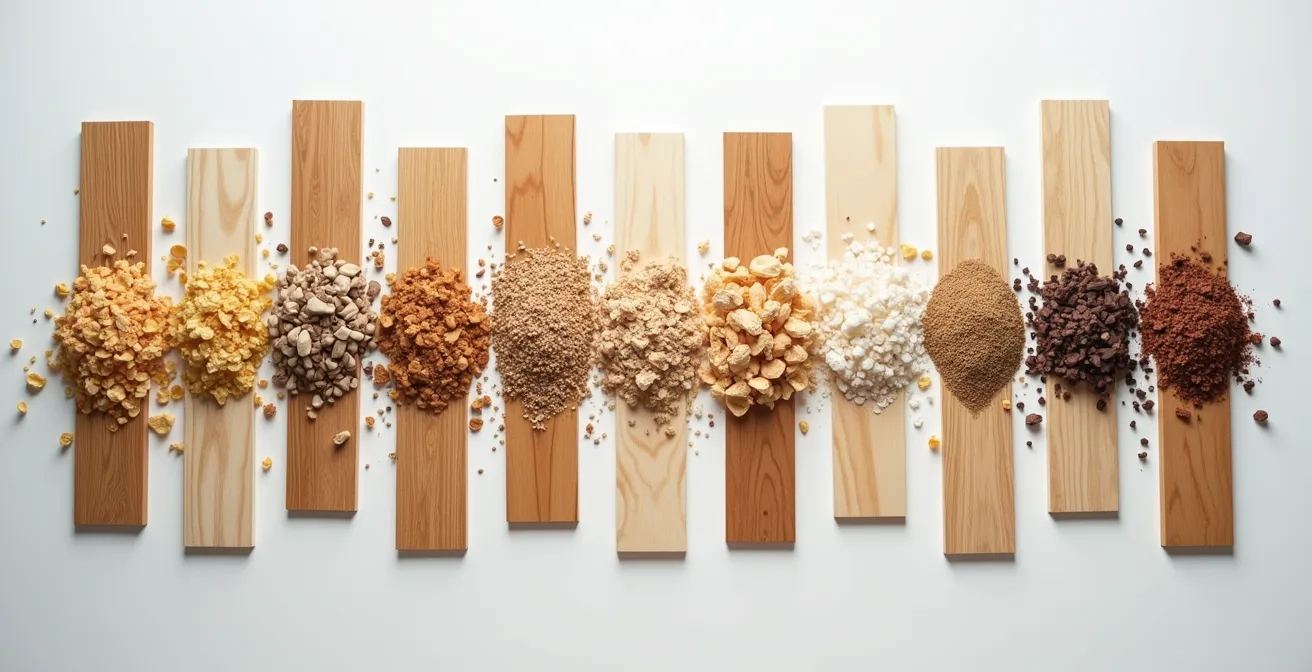
Perhaps the most overlooked principle of sustainability is longevity. A product that lasts for 100 years has a dramatically smaller environmental impact than one that must be replaced every 15 years, regardless of how “green” its manufacturing process is. This is the ultimate advantage of solid hardwood like oak over products like laminate or even some cheaper engineered floors. A 3/4-inch solid oak floor can be sanded down and refinished five to seven times over its lifespan, allowing it to adapt to new styles and erase decades of wear. Laminate flooring, with its photographic top layer, cannot be refinished at all. Once it’s significantly scratched or damaged, its only destination is the dumpster.
This concept of durability-as-sustainability fundamentally reframes the cost analysis. While laminate may be cheaper upfront, the lifecycle cost—both financially and environmentally—of replacing it multiple times can far exceed that of a single, long-lasting solid wood installation. Furthermore, a long-lived wood floor acts as a stable carbon sink, sequestering the carbon it absorbed as a tree for the entire duration of its use in your home. When you also factor in the environmental burden of manufacturing and shipping replacement floors from overseas—remembering that maritime shipping for imported flooring currently represents approximately 3% of global CO2 emissions—the argument for choosing a locally sourced, refinishable material becomes incredibly compelling. Choosing a floor that you install once is one of the most powerful sustainable decisions you can make.
Key Takeaways
- True sustainability goes beyond renewability; it requires analyzing a product’s full lifecycle carbon, from manufacturing to shipping.
- The “chemical load” of binders, adhesives, and plasticizers is a critical health and environmental factor often missed by basic VOC tests.
- Prioritizing longevity and refinishability—durability-as-sustainability—is one of the most impactful choices for reducing long-term environmental footprint.
How to Create a Material Palette That Doesn’t Clash?
Once you’ve made a thoughtful, sustainable choice for your flooring, that decision should become the anchor for your entire home’s material palette. The principle of material honesty—choosing authentic materials over synthetic imitations—is the key to creating a cohesive and harmonious space. A palette built on this foundation feels grounded, timeless, and avoids the visual discord that comes from mixing real wood with fake-wood vinyl or authentic stone with printed laminate.
Start with your flooring as the foundation. If you’ve chosen a beautiful solid oak, observe its grain, its undertones (are they warm, cool, or neutral?), and its texture. Build your palette from there with other honest materials that share a similar ethos. Think of materials that patina and improve with age: leather, natural stone, brass, linen, and wool. This approach ensures that your space will not only look cohesive on day one but will also grow more beautiful and full of character over time. A common mistake is to mix materials with conflicting finishes. For a serene and unified look, try to maintain consistency—if your floor has a matte, natural finish, opt for matte finishes on your walls and other surfaces as well.
Always test your material samples together in the actual room where they will be used. The color and texture of a material can change dramatically under different lighting conditions. Lay your flooring sample on the ground and place your fabric swatches, paint chips, and countertop samples next to it. Observe them in the morning light, at midday, and under artificial light at night. This simple step can prevent costly mistakes and ensure your carefully curated palette translates perfectly from concept to reality.
Linen vs Hemp: Which Is Better for Sensitive Skin Bedding?
The principle of a healthy, sustainable home extends to the most intimate materials we interact with daily, especially our bedding. For those with sensitive skin, the choice of fabric can make the difference between a restful night and persistent irritation. Linen and hemp are two of the best choices, both far superior to conventional cotton. Both are bast fibers, meaning they come from the stem of a plant, and they share remarkable properties: they are naturally breathable, moisture-wicking, and become softer with every wash.
From a cultivation standpoint, both are environmental champions. Hemp is particularly notable for requiring no pesticides and very little water, and it can actually improve the soil where it grows. Linen, derived from the flax plant, is similarly low-impact compared to water-intensive cotton. For sensitive skin, the key benefits are their breathability and hypoallergenic nature. Unlike synthetic fibers that can trap heat and moisture, creating a breeding ground for allergens, linen and hemp allow air to circulate freely, keeping the skin cool and dry. They are also naturally resistant to bacteria and mold.
So, which is better? The differences are subtle. Hemp fibers are slightly longer and more durable, giving the fabric a reputation for exceptional longevity. Linen is renowned for its unique “slubby” texture and crisp feel that relaxes into a soft drape over time. For many, the choice comes down to feel and personal preference. However, both represent a commitment to sensory sustainability—choosing materials that are not only gentle on the planet but also fundamentally gentle and calming for our bodies.
How to Use Natural Textures to Reduce Sensory Overload?
In our modern world, we are constantly bombarded with stimuli. The concept of sensory sustainability proposes that a truly sustainable home should be a refuge from this overload, and the textures of our building materials play a huge role in this. Synthetic materials often present a flat, uniform, and visually repetitive surface that can contribute to a subtle but persistent sense of unease. Natural materials, in contrast, offer gentle, complex, and non-repeating patterns that our brains are wired to find calming.
Consider the difference between a laminate floor with a repeating photographic wood grain and a solid oak floor where every plank is unique. Your eye can rest on the natural wood, finding endless variation in its grain and knots. This visual complexity is engaging without being demanding. The impact is not just visual; it’s also acoustic and tactile. For example, the natural composition of some materials offers inherent benefits, as bamboo flooring has properties that prevent odor buildup and is ideal for commercial spaces like gyms and yoga studios due to its natural vibration-absorbing qualities. This sound-dampening effect helps create a quieter, more serene atmosphere.
To reduce sensory overload, actively incorporate a variety of natural textures. Combine the smooth, cool surface of a stone countertop with the rough weave of a wool rug and the soft touch of linen curtains. The subtle variations in these materials provide a rich sensory experience that feels grounding and authentic. This tactile and visual diversity helps to break up monolithic surfaces and creates a space that feels layered, thoughtful, and deeply connected to the natural world. It transforms a house from a mere shelter into a restorative sanctuary.
To put these principles into practice, begin by applying this critical framework to every material choice in your renovation, moving beyond marketing claims to demand transparency and prioritize long-term value for both your home and the planet.